Skip to main content Skip to footer

Continuous Improvement at UHNM

Welcome to the Academy for Continuous Improvement

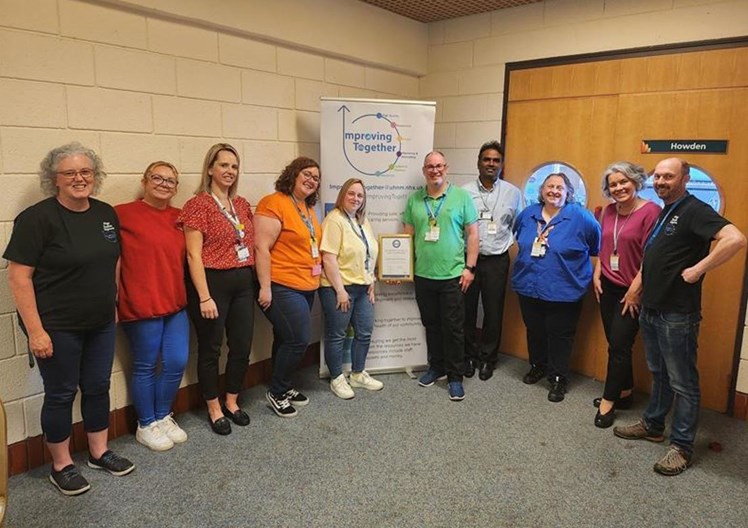
At the Academy for Continuous Improvement, we're a team of passionate specialists dedicated to helping everyone at UHNM build the skills, confidence, and routines needed to make continuous improvement part of everyday work.

Our approach is rooted in NHS IMPACT (Improving Patient Care Together) a national framework designed to support NHS organisations in developing the capability to continuously improve how care is delivered. It’s built around five core components:

  • A shared purpose and vision
  • Investing in our people and culture
  • Leadership that models and supports improvement
  • Growing improvement skills and capacity across teams
  • Embedding improvement into how we manage and deliver services

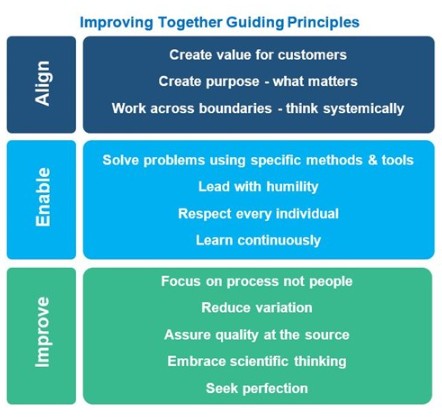
At UHNM, we bring NHS IMPACT to life through our own improvement approach: Improving Together. This methodology is based on Lean thinking and The Shingo Principles, helping us work together to solve problems and deliver better outcomes for patients and staff.

Why Do Things Feel Harder Than They Should?

Sometimes, the way we work gets in the way of the care we want to give. We waste time looking for things, waiting for information, or doing the same task more than once, anything that gets in the way of providing value to our patients. These everyday problems add up, they slow us down and frustrate patients and staff alike.

We call these problems waste and there are 8 common types we look out for. Continuous improvement is based on spotting and reducing these wastes, so we can free up time, reduce stress, and make things better for everyone.

Join us on the journey to embed continuous improvement into everything we do.


The five principles of Lean

Lean is a mindset and method that helps us improve the way we work by focusing on what really matters to patients and removing the things that don’t. At UHNM, Lean thinking is central to our Improving Together approach.

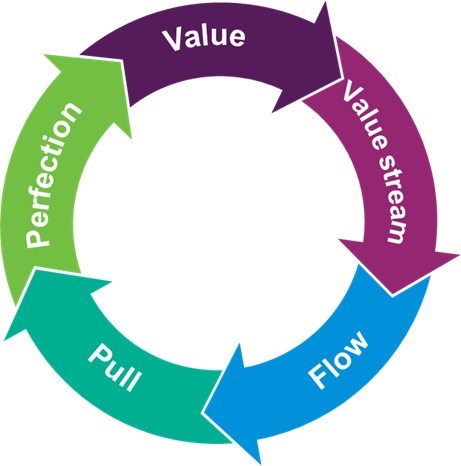
Here are the five key principles of Lean:

1) Value

Understand what matters most to our patients, this is what we define as value. Everything we do should contribute to delivering safe, effective, timely care that meets patients’ needs.

2) Value Stream 

Map out the steps involved in delivering care from start to finish. This helps us see the full process, identify waste (anything that does not add value to the patient/customer) or delays, and focus on improving the flow of value to the patient.

3) Flow

Once waste is removed, work should flow smoothly from one step to the next without unnecessary waiting, duplication, or rework. Creating flow improves efficiency and reduces frustration for both patients and staff.

4) Pull

Let the needs of patients drive the process. We aim to provide services just in time, based on real demand, rather than pushing work through the system regardless of whether it’s needed.

5) Perfection 

Lean is a journey, not a one-time fix. We aim for continuous improvement, learning every day, involving staff in solving problems, and always asking, “How can we do this better?”
Going Lean in the NHS Brochure 

Ruth Bednall - Director of Continuous Improvement Academy
Christopher Thompson - Consultant Clinical Lead
Dr Balaji Velayudam – Consultant Clinical Lead
Tracey Lane - Assistant Continuous Improvement Practitioner
Martin Olivo - Continuous Improvement Practitioner
Gemma Wyse - Continuous Improvement Practitioner / Registered Nurse
Laura Barlow – Continuous Improvement Practitioner
Melodie Mellor - Continuous Improvement Practitioner
Sarah Berrisford - Continuous Improvement Academy Administrator

Quality Improvement Residents

We’re proud to host residents on a 12-month rotation with our QI team, bringing fresh perspectives and valuable insights to how we support frontline teams. In the first half of their rotation, residents dedicate two days a week to QI before transitioning to one day a week, allowing them to balance clinical responsibilities while deepening their improvement skills. Each resident works on their own improvement project, applying QI tools and methodologies to real-world challenges. Their unique clinical experiences help shape our approach, fostering collaboration and innovation across teams. This partnership strengthens our commitment to continuous improvement, empowering our residents and the teams they support.


The 10 Shingo Principles

  • Respect Every Individual:

Valuing and respecting the contributions of all employees, fostering a positive and supportive work environment. 

  • Lead with Humility:

Leaders should be approachable, open to feedback, and willing to listen to others. 

  • Seek Perfection:

Continuously strive for improvement and excellence, embracing a culture of learning and refining processes. 

  • Embrace Scientific Thinking:

Use data, experimentation, and analysis to solve problems and drive innovation. 

  • Focus on Process:

Understand that the quality of the process determines the quality of the outcome. Remembering that the focus is on the process and not the people.

  • Assure Quality at the Source:

Embed quality checks and controls within the process to prevent defects from occurring. 

  • Improve Flow and Pull:

Optimise workflow to maximize value delivery and minimise waste, with a focus on responding to customer demand. 

  • Think Systemically:

Understand how different parts of the organisation are interconnected and how changes in one area can affect others. 

  • Create Constancy of Purpose:

Maintain a consistent focus on the long-term goals and values of the organization. 

  • Create Value for the Customer:

Continuously improve products and services to meet or exceed customer expectations. 


From Tools to Culture: Driving Sustainable Change through the Shingo Principles

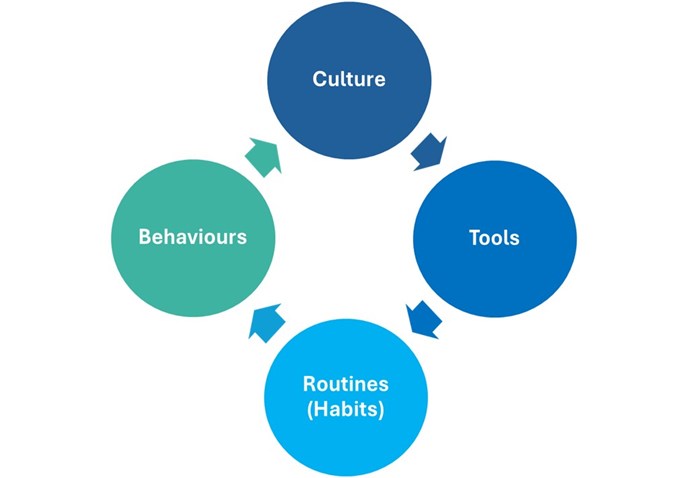
At UHNM, we believe that lasting improvement isn’t just about using the right tools - it’s about how we use them every day. Our approach, inspired by The Shingo Principles, follows a simple but powerful cycle:

Tools → Routines → Behaviours → Culture

  • Tools give us the structure to solve problems and make improvements. Some examples include visual boards, daily huddles, standard work, and root cause analysis techniques.
  • Routines help turn those tools into habits. When used consistently, they shape how we respond to challenges, learn from mistakes, and engage with one another. This might look like starting each shift with a quick improvement focused huddle or regularly reviewing data to understand performance.
  • Behaviours are what others see and experience. When leaders and teams use improvement tools with purpose and consistency, they model behaviours like curiosity, humility, self-discipline, willingness & perseverance all key to a thriving improvement culture.
  • Culture is the outcome. As improvement tools are embedded into routines and drive consistent behaviours, they shape a culture where everyone feels ownership, can speak up with ideas, and works together to deliver better care every day.

This approach ensures we don’t just do improvement - we live it.

Shingo Model - Shingo Institute - Home of the Shingo Prize