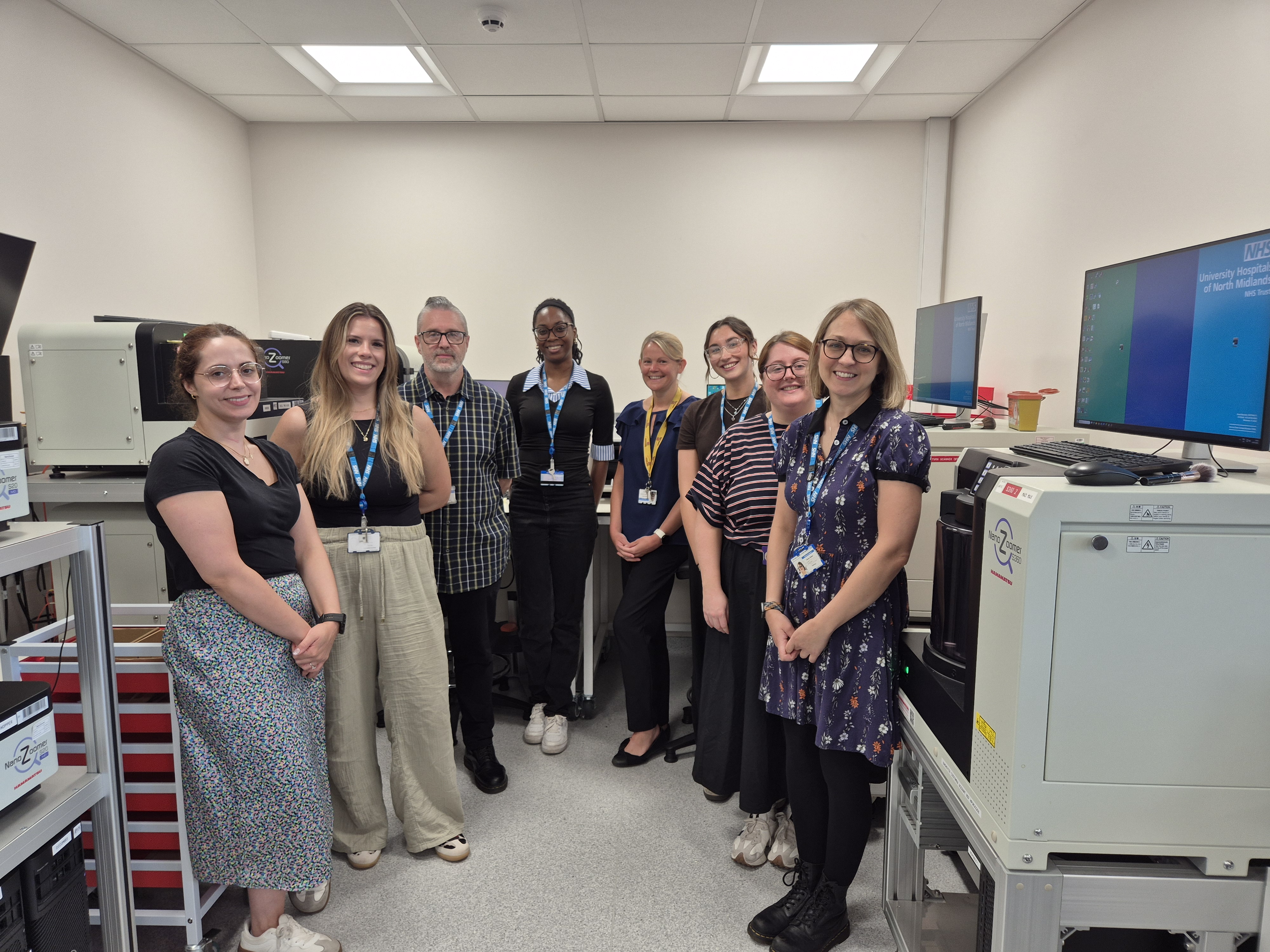
UHNM first in the Midlands to achieve 100 per cent digital histopathology reporting
Patients are set to benefit from faster and more efficient diagnosis after University Hospitals of North Midlands NHS Trust (UHNM) became the first NHS trust in the Midlands to introduce fully digital histopathology reporting.
The North Midlands & Cheshire Pathology Service (NMCPS) at UHNM has completed the transition to a fully digital system, allowing specialists to examine tissue samples using high-definition digital images rather than traditional glass slides. The technology helps doctors review cases more quickly, collaborate more easily with experts and support faster diagnosis, giving patients greater certainty and helping them access the right treatment sooner.
The Trust became the first NHS trust in the Midlands to achieve 100 per cent digital histopathology reporting, marking a major milestone in the digital transformation of diagnostic services in June and follows an 18-month programme of investment, innovation and workforce development.
The move to a fully digital service is expected to improve reporting turnaround times, provide better support for MDT discussions and make it easier for specialists to review complex cases requiring second opinions. By enabling diagnoses to be reviewed and shared more efficiently, the new system will help patients begin treatment sooner and support improved patient outcomes.
To create the digital images, glass slides are loaded into specialist scanners which use a high-resolution digital camera attached to a microscope. Hundreds of high-resolution images are captured and digitally stitched together to create a complete image of the tissue sample. The image is then uploaded to the Pathology Sectra PACS system, where laboratory staff carry out quality checks before it is released to pathologists for diagnosis and reporting.
Dr Jane Walker, Lead Consultant Histopathologist at UHNM, said: “Traditionally, histopathology reporting has relied on stained tissue samples mounted on glass slides being examined under a microscope. The process required slides to be physically transported, tracked and stored, creating additional administrative and logistical challenges and making collaboration between clinicians more time consuming. We have been working towards the move to digital pathology for some time and, while there have been some challenges, transitioning to a fully digital service is an exciting and important step which reflects the tremendous collective effort of the team, who have supported one another throughout this transformation. Becoming the first Trust in the Midlands to implement 100 per cent digital pathology reporting is a significant achievement for the service and, most importantly, for our patients, who will benefit from faster, more efficient diagnostic processes.
"This new way of reporting will bring significant benefits in efficiency and flexibility and will open up new opportunities for collaboration with other trusts. Looking ahead, the next phase of innovation will focus on exploring how artificial intelligence can support and enhance diagnostic reporting."