
Royal Stoke bowel service wins regional patient care award
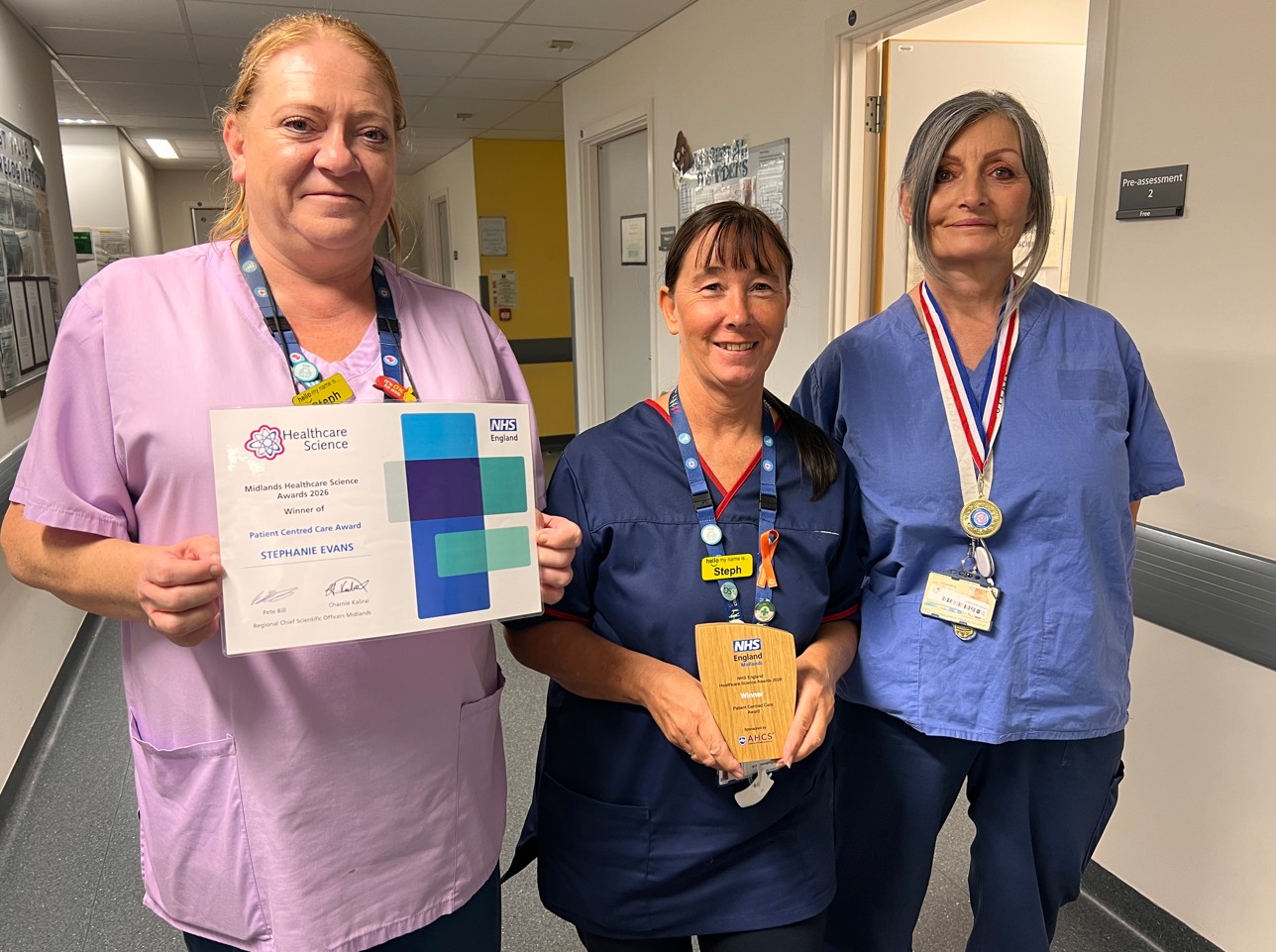
A specialist service at University Hospitals of North Midlands NHS Trust (UHNM) that has helped more than 300 patients with bowel dysfunction avoid surgery last year has received regional recognition for its work.
The bowel biofeedback service at the Royal Stoke University Hospital has been recognised at the Midlands Healthcare Science Awards 2026 with Stephanie Evans, clinical scientist, winning the ‘Patient Centred Care’ award.
The service helps people manage bowel dysfunction through personalised support including lifestyle changes, diet, exercise, posture and toileting techniques, helping to improve symptoms and reduce the need for more invasive treatment.
Stephanie said: “It is an honour to win this award. We are a very small team and quite often go unrecognised for the exceptional work that we do.
“It feels absolutely wonderful to be recognised, but more importantly we are improving so many lives. It is great to hear people benefiting from our service.”
Stephanie led improvements to the service which allow some patients to have their assessment and treatment during a single hospital visit.
The approach helps patients better understand and manage their condition, with many reporting improved symptoms and confidence and a reduced need for surgery.
Stephanie added: “At the heart of what myself and the team do is providing clarity, reassurance and science-based insight into symptoms that affect so many people, ensuring every patient receives compassionate, evidence-driven and personalised care.”
UHNM also celebrated success in the ‘Regional Lifetime Award’, with Alice Alcock from UHNM’s Microbiology Service and the North Midlands and Cheshire Pathology Service named as a winner.
Three other UHNM healthcare scientists were shortlisted. Michaela Brogan, head of hearing and balance services, was shortlisted for the ‘Patient Centred Care’ award, Katie Berger, chief healthcare scientist, for the ‘Scientific Leadership’ award, and Lisa Court, neurophysiology lead scientist for the ‘Training and Education’ award.
Winners from the Midlands awards will also be put forward for the National Healthcare Science Awards.