Skip to main content Skip to footer

Phenobarbitone

Test Alias / Common Abbreviations

Phenobarbitone


Department


Biochemistry
Royal Stoke University Hospital


Pre-analytical information  


Add-on requests: up to 24 hours post sampling

Minimum Retest Interval: not applicable


Sample  Collection instructions:

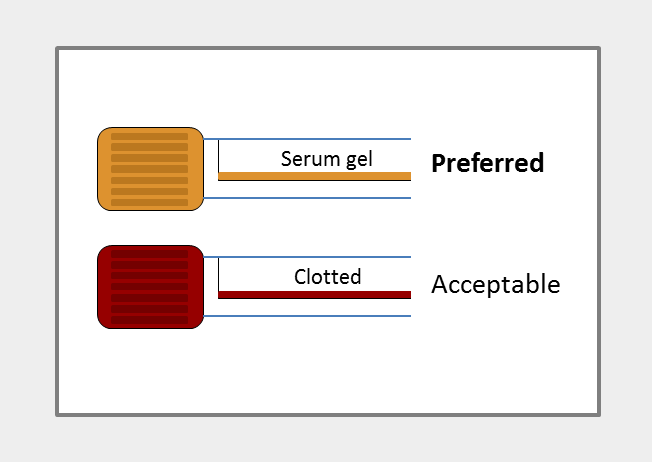
Collect the blood sample using normal venepuncture technique into a gel serum or plain serum tube (yellow or red-top).


Sample Transport & Stability Information:


Samples should be sent to the laboratory on the same day as collection to ensure sample integrity is maintained.  If a delay in receipt of the sample is anticipated, please contact the laboratory to discuss storage requirements.

Samples should be taken pre-dose or >6 hours post dose and samples must be received in the laboratory within 8 hours of sample collection. 

Stable in separated serum for 1 day at room temperature, 2 days at 4-8oC and 6 months at -20oC.

For generic information on test requesting, sample labelling and packaging, and sample transport – see the frequently asked questions here.


Sample Type, Container & Volume

Adult sample type:


Paediatric sample type:

Plain serum


Turnaround Time

Based on receipt at testing site.

Within 24 hours.



A target range of 10-40mg/L is frequently said to be associated with optimal control, but these limits should be interpreted with flexibility.

Results outside the reference range do not necessarily indicate disease. Similarly, results within the reference range do not preclude abnormality. Please contact the Duty Biochemist for discussion of individual patient results.

Monitoring therapy is of limited value due to the poor correlation of plasma level with clinical and toxic effects. Monitoring may be useful in confirming compliance, overt toxicity, and the monitoring of childhood febrile convulsion therapy.

Oral absorption is complete but slow; peak concentrations do not occur for several hours and plasma half life is long. Phenobarbitone levels rise by up to 40% in conjunction with Sodium Valproate. Other drugs such as primidone and phenytoin increase phenobarbital concentration. Alkaline urine increases the rate of renal clearance.

There are a number of non-pathological factors that can influence levels of specific analytes, giving falsely elevated or reduced levels. If you require more information regarding the effects of these factors on the individual test results, please contact the Duty Biochemist.

Serum/plasma samples are routinely screened for the presence of haemolysis, icterus and lipaemia. Results are not reported if one or more of these has been detected at levels deemed to have had a significant impact on the accuracy of the test.

For more information, please see the following: https://labtestsonline.org.uk/tests/phenobarbital

Reviewed / Updated On: 02/12/2025