Skip to main content Skip to footer

Carbamazepine

Test Alias / Common Abbreviations

Tegretol, Curatil, CBZ

Department


Biochemistry
Royal Stoke University Hospital

Pre-analytical information  


Add-on requests: up to 7 days after sampling

Minimum Retest Interval: not applicable


Sample  Collection instructions:

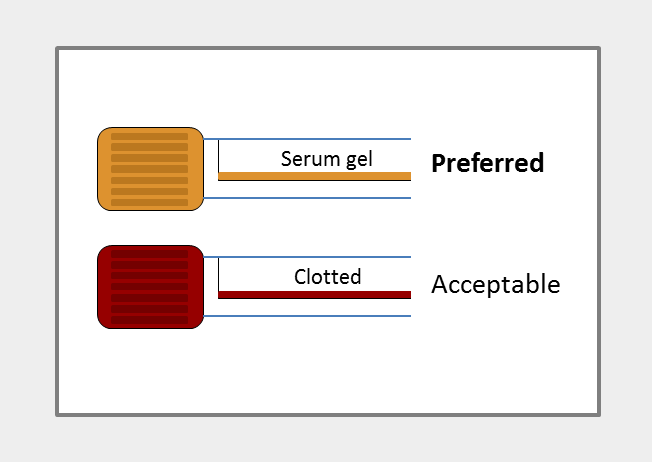
Collect the blood sample using normal venepuncture technique into a gel serum or plain serum tube (gold- or red-top).

Samples should ideally be taken pre-dose, though samples taken >6 hours post dose are acceptable. 


Sample Transport & Stability Information:


Samples should be sent to the laboratory on the same day as collection to ensure sample integrity is maintained. If a delay in receipt of the sample is anticipated, please contact the laboratory to discuss storage requirements.

Stable in separated serum for 2 days at room temperature and 1 week at 4-8oC. 

For generic information on test requesting, sample labelling and packaging, and sample transport – see the frequently asked questions here.


Sample Type, Container & Volume

Adult sample type:


Paediatric sample type:

Plain serum


Turnaround Time

Based on receipt at testing site.

Within 24 hours.


Target therapeutic range is 4.0-12.0 mg/L

Results outside the reference range do not necessarily indicate disease. Similarly, results within the reference range do not preclude abnormality. Please contact the Duty Biochemist for discussion of individual patient results.

Carbamazepine is an anticonvulsant used in the treatment of tonic-clonic seizures (Grand Mal) and complex partial (focal) seizures, manic depression, diabetic neuropathy, diabetes insipidus and trigeminal neuralgia. Dose is a poor guide to plasma concentration and so monitoring of serum carbamazepine concentration may be necessary when clinical response not achieved.

Concentrations vary widely across the dosage interval and therefore timing of sample is important. Trough measurements are most reproducible. Samples should be taken pre-dose or >6 hours post dose.

Clearance is affected by hepatic disease but not renal disease, propoxyphene, age (in children) and pregnancy.

Dizziness and visual disturbances become increasingly frequent at concentrations >10 mg/L. Side effects may occur at lower levels in patients on combination therapy.

Phenobarbital, phenytoin and primidone induce carbamazepine metabolism and therefore reduce the effectiveness of the dose. Metabolism is inhibited by valproate and lamotrigine.

Carbamazepine is metabolised to the epoxide then the dihydrodiol by CYP3A4 and CYP2C8. It induces its own metabolism by initiating the production of microsomal liver enzymes; hence, the elimination half-life will decrease and the effective dose may need to be increased after 4 weeks to maintain efficiency.    
The epoxide metabolite is pharmacologically active but rarely measured and this makes the relationship between carbamazepine concentrations and clinical response complicated. 

Although the target range is 4-12 mg/L, some patients may show a response below this level and some may maximally benefit from higher levels, however this may be limited by unacceptable neurotoxicity. 

Toxicity related symptoms can include neurological effects, gastrointestinal disturbances, double vision (associated with peak levels), skin rashes (usually mild, but can include Stevens-Johnson syndrome or Toxic Epidermal Necrolysis); rarely leucopoenia, SIADH and aplastic anaemia.

For more information, please see the following: https://labtestsonline.org.uk/tests/carbamazepine

Reviewed / Updated On: 02/12/2025