
UHNM plays key role in major national breast cancer radiotherapy trial
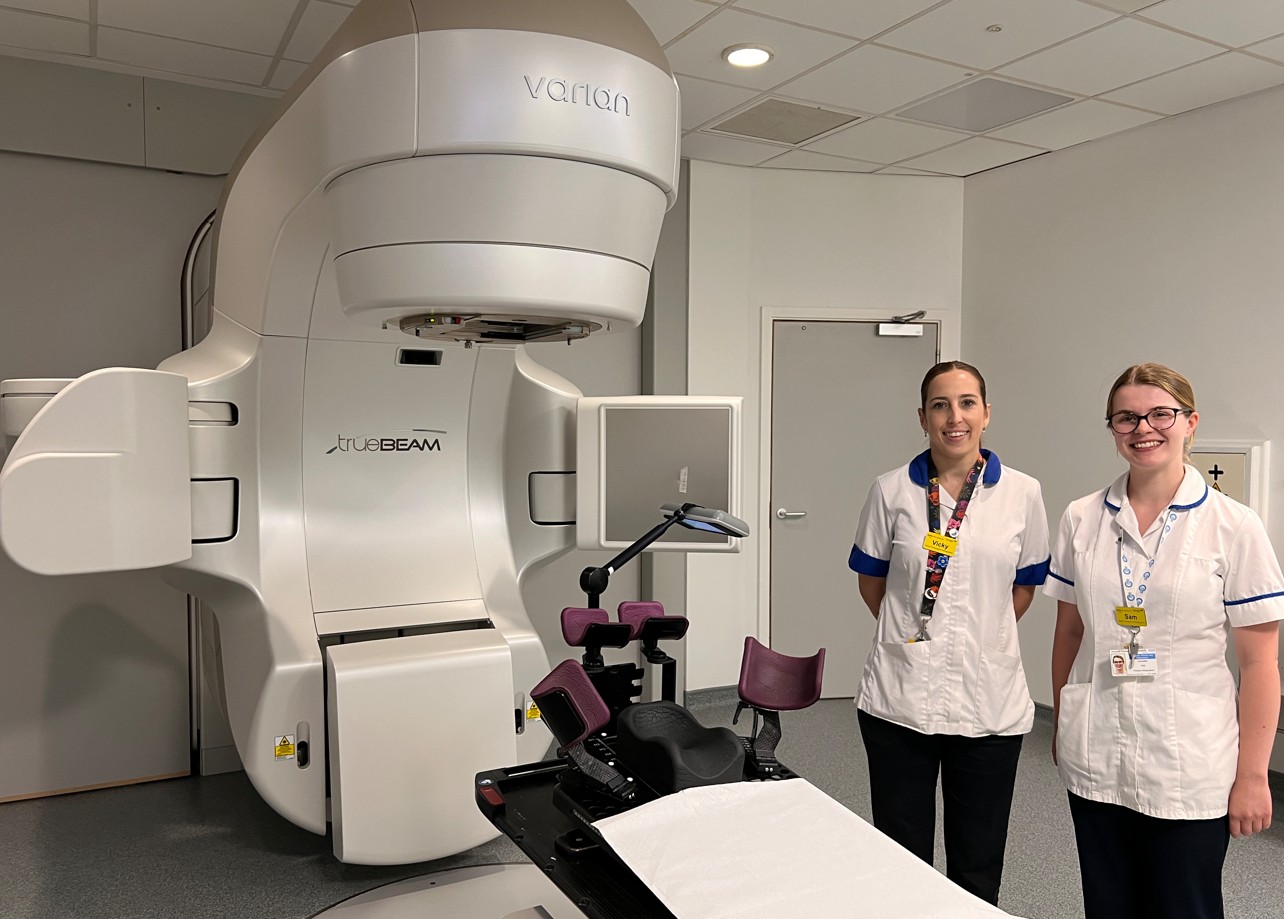
A major breast cancer trial supported by University Hospitals of North Midlands (UHNM) has helped transform radiotherapy treatment for patients across the UK and around the world.
The FAST-Forward trial found that a one-week course of radiotherapy is just as safe and effective as the previous three-week standard for many breast cancer patients.
UHNM played a leading role in the research as the largest recruiting centre in the trial, recruiting more patients than any of the other 97 NHS Trusts involved.
The latest findings, published in The Lancet Oncology, are based on 10 years of results from more than 4,000 patients and show the shorter treatment works just as well over time, with equally strong cancer control.
The trial, sponsored by the Institute of Cancer Research (ICR), compared the standard 15 radiotherapy sessions over three weeks with shorter five-session courses delivered over one week.
After 10 years follow-up researchers found cancer recurrence rates remained very low across all groups and similar side effects, confirming the shorter treatment schedule is safe and effective for patients.
Professor Murray Brunt, national chief investigator and professor of clinical oncology at Keele University, and former consultant clinical oncologist at UHNM, said: “These 10-year results provide definitive long-term evidence that one-week radiotherapy given at an appropriate dose to the breast is a safe, effective and more practical option for people with breast cancer.
“By reducing treatment from 15 sessions to just five, we can offer patients the same excellent cancer control with fewer hospital visits, less disruption to their daily life and reduced pressure on healthcare services. This approach has already transformed practice in the UK and has the potential to improve access to life-saving treatment for people with cancer worldwide.
“These final 10-year results mark a significant milestone in breast cancer treatment and reinforce the growing shift toward more efficient radiotherapy approaches. The success of FAST-Forward has led to the ongoing National Institute for Health and Care Research (NIHR)-funded FAST-Forward Boost trial, which is investigating whether more extensive radiotherapy, including an additional ‘boost’ dose for some patients can also safely be delivered in five days.”
Earlier results from the FAST-Forward trial led to the five-treatment schedule becoming standard NHS practice in 2020. Researchers estimate tens of thousands of patients across the UK have already benefited.
The shorter treatment also means patients spend less time travelling to and from hospital, and it helps free up capacity in radiotherapy services.
Around 37,000 people receive radiotherapy for breast cancer in the UK every year.
Karen Davis from Newcastle-under-Lyme took part in the FAST-Forward trial after being diagnosed with stage two breast cancer.
She said: “I’d just been diagnosed when I was told about the trial. I was 45 and thought I was going to die at first, but it turned out to be treatable which was a huge relief.
“I had radiotherapy, a lumpectomy and an oophorectomy, and I was on tamoxifen for 10 years. I had the treatment in five days instead of three weeks and I’ve been in remission ever since.
“Now I work fitting wigs for women with cancer. When I tell them I’ve been through it and had five days of radiotherapy on the trial, it gives them hope, I’m really glad I took part.”
Mr Sankaran Narayanan, consultant oncoplastic breast surgeon at UHNM, said: “This is a truly remarkable achievement and a wonderful example of what can be accomplished when research teams, clinicians, radiographers and breast care nurses work together.
“UHNM was the largest recruiting centre in this practice-changing trial and our patients made a vital contribution to research that has changed radiotherapy practice internationally and is now benefiting people across the world.
“The move from 15 treatments to just five has improved convenience for patients, increased access to radiotherapy and helped healthcare systems use resources more effectively. It is something everyone involved should be incredibly proud of.”
Professor Brunt added: “Hearing patients talk about how much it helps to only need one week of radiotherapy has been really encouraging for everyone involved.”
The findings were also shared during an Institute of Cancer Research (ICR) webinar, where experts discussed the 10-year results and the trial's impact on breast cancer treatment worldwide.