
UHNM event showcases digital tool helping patients leave hospital sooner
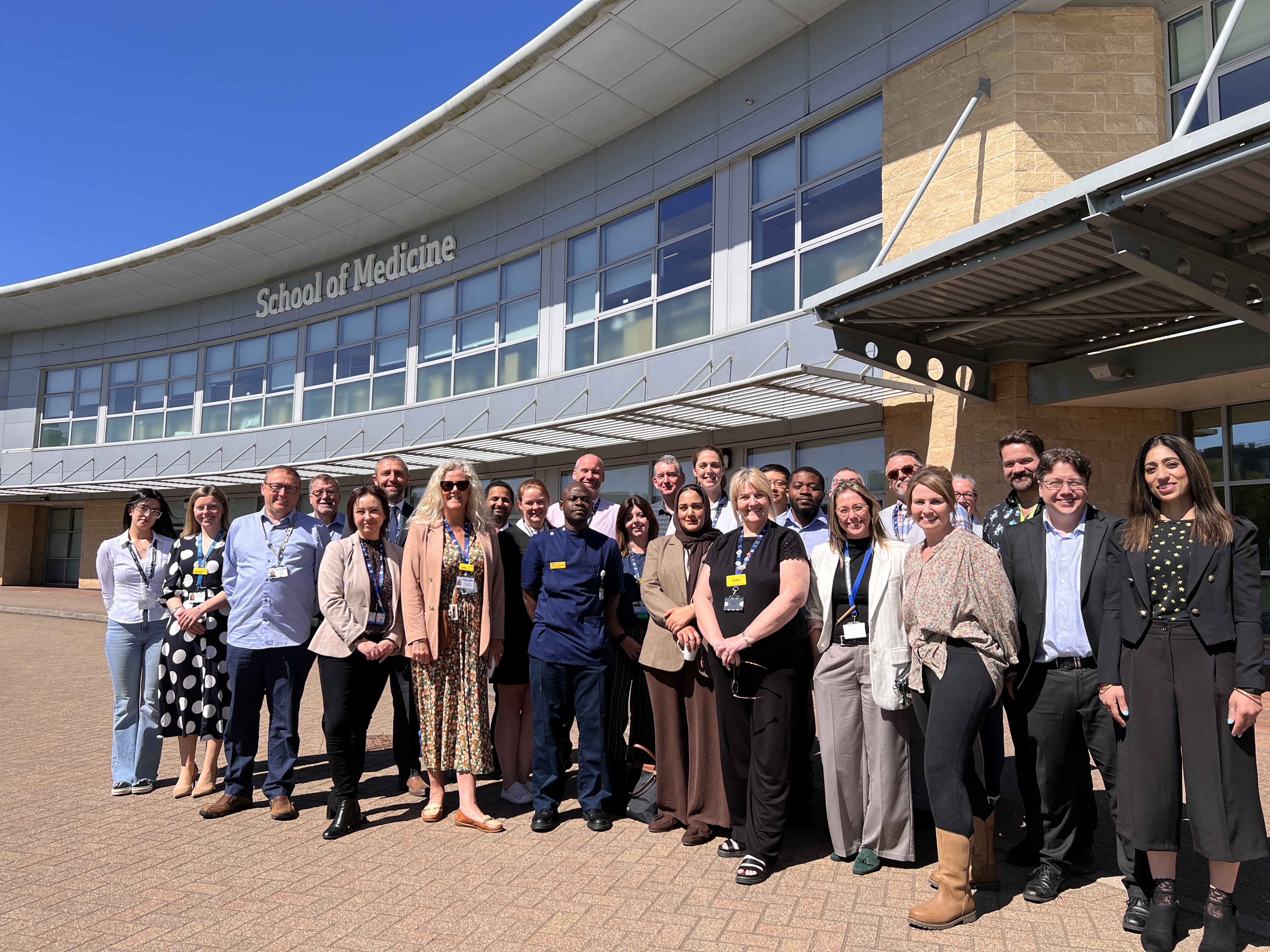
UHNM has brought together health and care partners from across Staffordshire to showcase how its High Risk of Delayed Transfer of Care (HRD) tool is helping patients leave hospital sooner and improve patient flow.
Developed at UHNM and funded by UHNM Charity, the HRD tool uses real-time information from GP, hospital and social care records to identify patients at risk of delayed discharge earlier in their hospital stay.
Held at Keele University’s Medical School, the event welcomed clinicians, operational teams, local authorities, primary care colleagues and academic partners to share learning and explore how the tool is being used day to day to benefit patients across the region.
By signalling those patients with complex needs requiring additional support when they return home, the tool helps teams to plan, coordinate care more effectively ensuring patients return home quickly and safely.
Since going live in December 2024, the HRD tool has supported hundreds of patients to be discharged sooner and reduced average length of stay by around 1.2 days in some areas, including urgent and emergency care.
Dr Andrew Davy, GP lead for research and development in A&E, said: “It feels like we’re one team working towards the same goal, and that’s really important in something as complex as patient flow.
“The event has been an opportunity to bring partners together, share what’s been developed through the HRD tool and see how different services are using it day to day.
“What we’re seeing is teams making small, practical changes that add up. Every service is contributing in its own way, and together that’s making a real difference for patients.
“We’re starting to see how this approach can be scaled further across the system, and how we can keep building on that progress so more patients benefit sooner.”
Supported by UHNM’s Research and Innovation (R&I) team and funded by UHNM Charity, the tool was developed in-house by UHNM’s Business Intelligence Service, working with local NHS providers, the Integrated Care Board, Graphnet, Keele University and the GP Federation, with additional support from the National Institute for Health and Care Research (NIHR) Applied Research Collaboration West Midlands and the North Staffordshire Medical Institute.
During the event, speakers from a range of services shared how the tool is being used to support patient flow, including respiratory, frailty, palliative care and social care teams, along with virtual wards and digital and data teams.
Sessions also looked at governance, data sharing and how different parts of the system work together, along with practical examples of teams using daily multidisciplinary reviews to spot patients earlier and improve care planning.
Speaking at the event, Dr Simon Constable, chief executive, said: “This work shows what can be achieved when teams come together from different providers with a shared focus on improving care.
“We are in a better position than we were this time last year, and that’s down to the collective effort of teams collaborating and working differently across the system.
“Patient flow is about quality. The sooner we can assess and treat patients, the better their outcomes will be, and this work is helping us do that more effectively.”
Mike Goodwin, deputy chief operating officer at UHNM, added: “The HRD tool gives earlier visibility of patients who may struggle to move on, which helps teams act sooner and reduce delays.
“The focus now is to keep building on this and continue improving patient flow across urgent and emergency care.”
Dr Ajit Thomas, consultant respiratory physician, said: “The HRD tool is helping teams identify at-risk COPD patients sooner and make earlier, more coordinated decisions about discharge, improving flow and patient experience. It has freed up nursing time to run ambulatory clinics and support more holistic follow up care.”