
New acid reflux test now available at UHNM
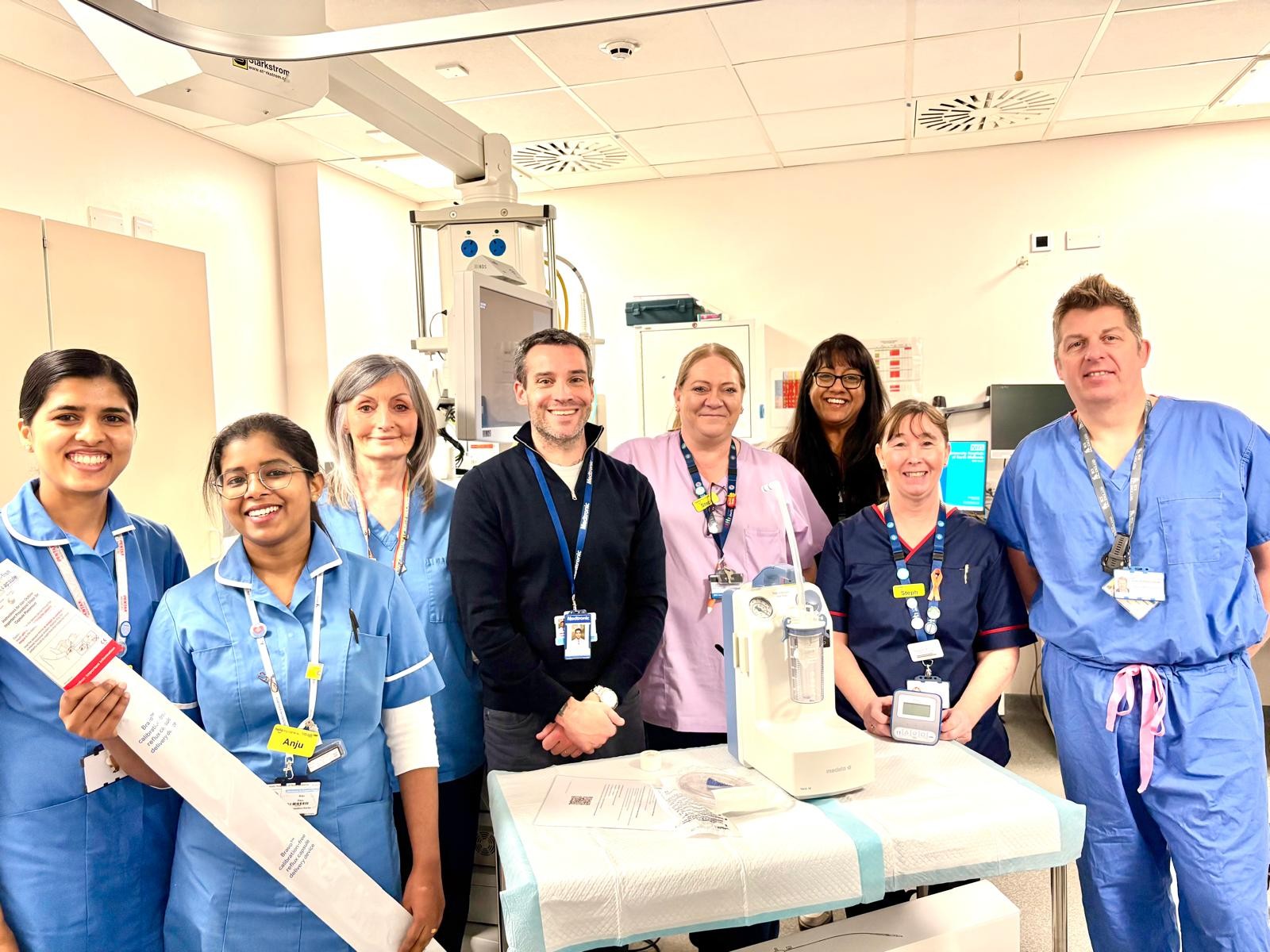
Patients at University Hospitals of North Midlands NHS Trust (UHNM) can now access a new test to diagnose acid reflux closer to home, avoiding the need to travel to other hospitals.
The Gastrointestinal (GI) Physiology team has introduced the Bravo pH monitoring system, a catheter-free test that gives a more detailed picture of acid reflux over several days.
Previously, some patients had to travel to specialist centres such as Manchester or London to access this type of investigation. The new service means eligible patients can now be tested locally at Royal Stoke, making the process easier and more convenient.
The new procedure uses a small capsule placed in the oesophagus during a routine endoscopy to record acid levels over up to four days, giving clinicians a clearer picture of symptoms and whether further treatment, including surgery, may be needed.
It’s particularly helpful for patients who can’t tolerate the traditional 24-hour catheter-based test.
Stephanie Evans, clinical scientist in GI physiology, said: “Traditionally, the gold standard test involves a catheter through the nose for 24 hours, which some patients can find uncomfortable and difficult to tolerate. It can also affect how they go about their normal day, which sometimes means we don’t get a fully representative picture of their symptoms.
“The Bravo system gives us another option, it’s catheter-free and allows patients to carry on with their usual daily activities much more comfortably, while we collect data over a longer period of up to four days. That gives us a more realistic and detailed understanding of what’s happening.
“For patients who couldn’t tolerate the standard test before, this would often mean travelling to Manchester or London to have this type of monitoring. Now we can offer that test here at UHNM which makes a big difference.
“It’s really beneficial for patients and helps us make clearer decisions about their care and treatment, particularly for those who are still experiencing symptoms but may not have shown anything on earlier tests. We’ve been working towards introducing this for a long time, so it’s great to now have it available.”