
First UHNM patient receives gene-targeting treatment for rare form of MND
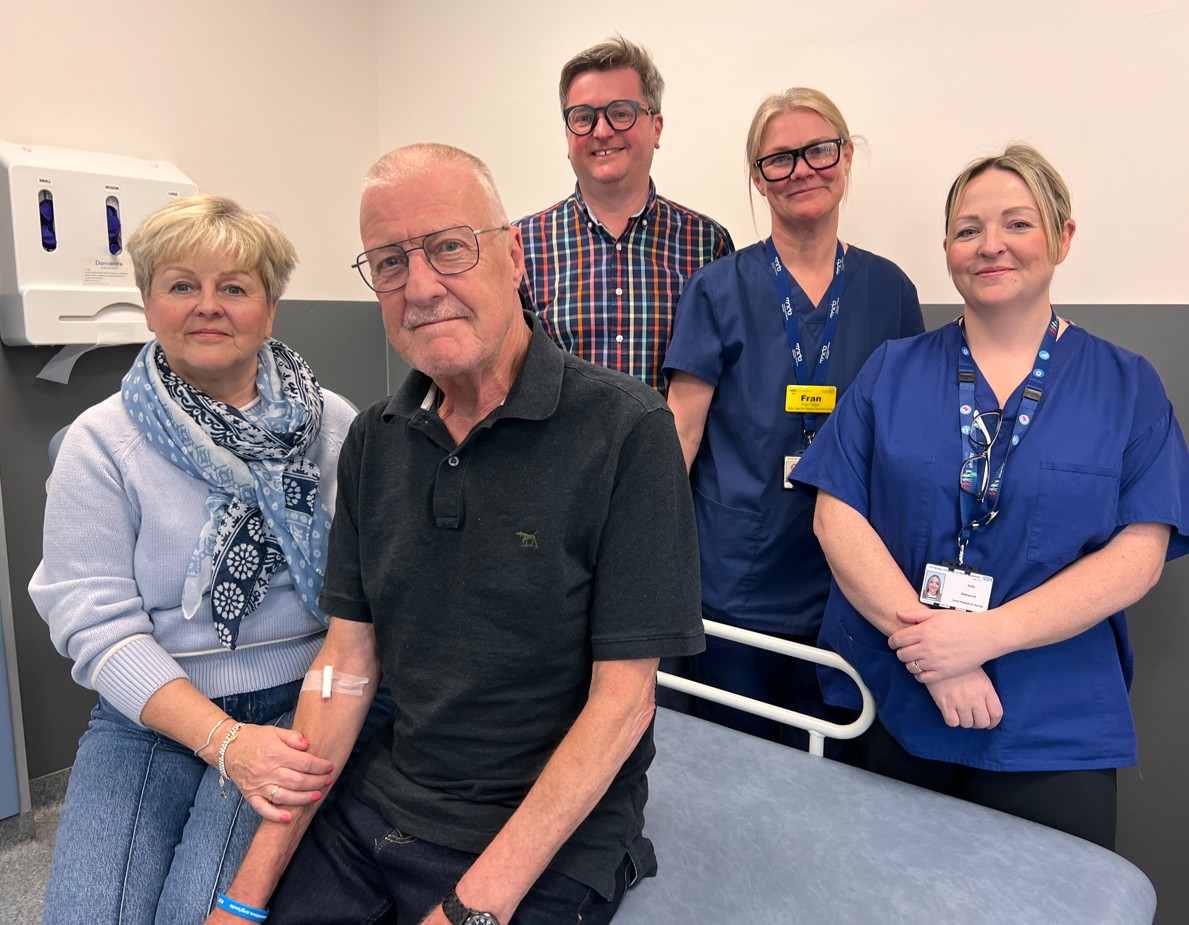
University Hospitals of North Midlands NHS Trust (UHNM) has treated its first patient with a new gene-targeting therapy for a rare form of motor neurone disease (MND).
Michael Dean, 67, from Tarporley in Cheshire, is the first patient at UHNM identified with a specific genetic form of MND to receive the treatment known as Tofersen, which is designed to help slow disease progression and support quality of life.
The therapy was delivered through the North Midlands MND Care & Research Network at Royal Stoke University Hospital. It is given via a lumbar puncture into the spine and works by targeting the underlying genetic cause of the condition.
Michael, a former Manchester Airport employee, was diagnosed in December 2024 after first noticing weakness in his leg. Since then, the condition has gradually affected his mobility and day-to-day life.
While it is not a cure, clinical evidence shows it can significantly slow progression in eligible patients.
Michael said: “When I was told this treatment might be available to me it felt like a lifesaver, I honestly believe that. If it can slow things down and give me more time with some independence, that means everything.
“Nobody wants to hear the words motor neurone disease, it was devastating. But from the very beginning the team at UHNM have been incredible. They just make you feel like you’re not on your own.
“Everything is more of a struggle now. Simple things take a lot more effort and I get tired quickly, but I’m still determined to keep doing as much as I can for as long as I can.”
Access to Tofersen is still being reviewed by the National Institute for Health and Care Excellence (NICE), so availability varies across the UK. At UHNM, patients have been able to receive the treatment locally, supported by the North Midlands MND Care & Research Network, helping reduce the need to travel to other centres.
Dr Tom Lambert, consultant neurologist, said: “Being able to discuss Michael’s genetic results and offer this treatment was an important and positive moment.
“While this is not a cure, it represents a step forward, and we will continue to take part in clinical trials and research to help develop effective treatments for more patients with MND in the future, not just those with this rare genetic form.”
Michael added: “We feel very fortunate to be able to have this treatment here at UHNM. There are people in other parts of the country who can’t access it yet, so it really does make a difference being able to have it locally.
“The care has been absolutely amazing, the doctors and nurses are just brilliant. They’ve been there every step of the way and it makes a very isolating condition feel a lot less isolating.”
Michael’s wife Helen added: “When you first hear the diagnosis it’s overwhelming, but the support we’ve had at UHNM has made such a difference. Being told about this treatment felt like a second chance.”
He has also undertaken rehabilitation exercises outside of his NHS care to help maintain his mobility.